Texas Instruments faces a striking contrast between its solid market position in analog and embedded semiconductors and the inherent volatility of the semiconductor industry. The company’s emphasis on durable components challenges it to sustain stability amid shifting technological demands and competitive pressures.
This article examines how Texas Instruments navigates these industry complexities through its product focus and strategic choices. Understanding these dynamics is essential for investors assessing the company’s resilience and long-term value in a rapidly evolving market.

Table of contents
Key Points
- Highlight Texas Instruments’ focus on durable analog and embedded components.
- Emphasize stability from products essential to industrial and automotive sectors.
- Underline Texas Instruments’ position as a resilient mega-cap semiconductor company.
Texas Instruments’ Core Business and Industry Position
Texas Instruments is a semiconductor company specializing in durable analog and embedded components used primarily in factory equipment and automobiles. The company operates globally, focusing on industrial and automotive applications. Texas Instruments’ strategic emphasis on foundational analog and embedded technologies supports stable demand and contributes to its status as a mega-cap firm.
Challenges in Maintaining Stability and Resilience
The company faces challenges in maintaining stability and resilience within the semiconductor industry due to its focus on durable analog and embedded components. This issue is relevant as Texas Instruments’ market position depends on its ability to sustain demand in critical industrial and automotive sectors that require reliable semiconductor solutions.
Market Reaction
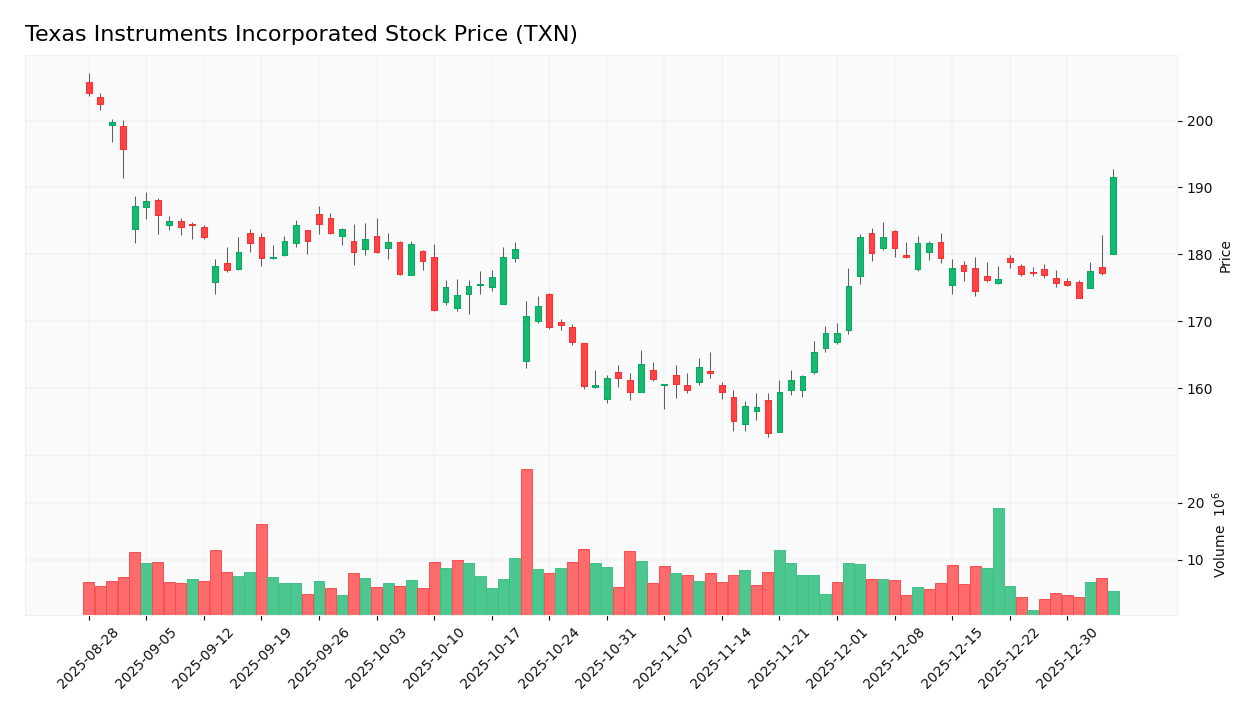
The focus on durable analog and embedded components may help Texas Instruments maintain stability in the semiconductor industry despite ongoing challenges. The stock price increased by 8.22% over one trading day:
Target Prices
There is an analyst consensus on target prices for Texas Instruments Incorporated. The target price range reflects market expectations for the stock’s potential price movement.
| Target High | Target Low | Consensus |
|---|---|---|
| 245 | 145 | 188.1 |
Insider Trades
Recent insider trading at Texas Instruments shows a higher volume of disposed shares compared to acquisitions during late 2025. Key transactions include directors receiving stock units and officers gifting common stock, with significant sales noted from senior executives.
Ratings analysis
The insider trades reflect a net disposition trend, with 10 disposed transactions against 5 acquisitions in Q4 2025. This suggests a cautious stance by insiders amid challenges in maintaining stability within the semiconductor sector.
Impacts on the Income Statement
The income statement shows a gross margin of 58.14%, an EBIT margin of 38.11%, an interest expense of 3.25%, and a net margin of 30.68%, all marked as favorable. However, overall income statement growth indicators reveal mostly unfavorable trends, leading to a generally unfavorable income statement evaluation.
The challenges related to maintaining stability and resilience in the semiconductor industry through durable analog and embedded components could affect income statement metrics by contributing to declines in revenue growth (-10.72% in one year), gross profit growth (-17.47% in one year), EBIT growth (-23.29% in one year), and net margin growth (-17.43% in one year).
Stock Grades
Current stock ratings for Texas Instruments Incorporated are available from several recognized financial institutions. The most recent grades reflect a range of actions including hold, sell, and buy recommendations by established firms.
| Grading Company | Action | New Grade | Date |
|---|---|---|---|
| Truist Securities | maintain | Hold | 2025-12-19 |
| Goldman Sachs | downgrade | Sell | 2025-12-15 |
| Rosenblatt | maintain | Buy | 2025-10-22 |
| Truist Securities | maintain | Hold | 2025-10-22 |
| Cantor Fitzgerald | maintain | Neutral | 2025-10-22 |
Conclusion
Texas Instruments’ overall results present an unfavorable income statement evaluation, despite favorable profitability margins. The company faces challenges maintaining revenue and net income growth, with declines in key metrics over the past year and overall period, impacting its stability in the semiconductor sector.
Longer-term, Texas Instruments continues to create value with a slightly favorable moat, though profitability is declining. Investors should monitor the company’s ability to sustain its durable analog and embedded components focus, alongside its financial health indicators such as debt-to-equity and margin trends.
Investments involve risk, and this article does not constitute investment advice or recommendations.
Sources
I wrote this article based on the following sources to provide you with a well-rounded understanding of Texas Instruments Incorporated’s current market position. I encourage you to consult these sources to delve deeper into the subject and make more informed investment decisions.
- Texas Instruments Ahead Of Earnings: I See Stability, Not Urgency — Seeking Alpha
An analysis highlighting TXN’s stable position driven by its analog and embedded chip segments, focusing on industrial and automotive markets with insights on revenue trends and future growth drivers.
Texas Instruments Incorporated Analysis
I encourage you to read the comprehensive analysis of Texas Instruments Incorporated to enhance your investment decisions: Texas Instruments Incorporated Analysis