Home > Analyses > Energy > Diamondback Energy, Inc.
Diamondback Energy reshapes the energy landscape by unlocking vast unconventional oil and gas reserves in the Permian Basin. Its leadership in developing the Spraberry, Wolfcamp, and Bone Spring formations cements its reputation for operational excellence and innovation. With a robust midstream infrastructure supporting production efficiency, Diamondback stands out among its peers. Yet, as energy markets evolve, I ask: do its fundamentals still support its premium valuation and growth ambitions?
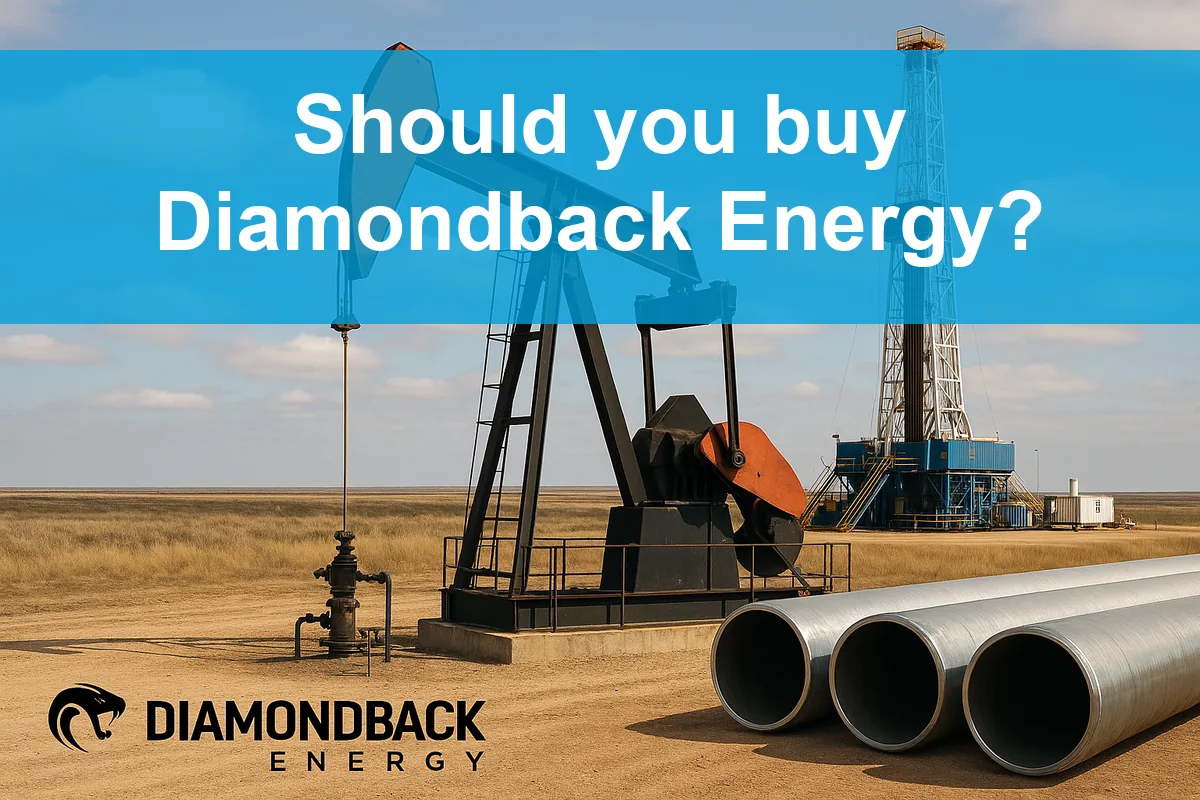
Table of contents
Business Model & Company Overview
Diamondback Energy, Inc., founded in 2007 and headquartered in Midland, Texas, stands as a formidable player in the Oil & Gas Exploration & Production sector. It operates a vast ecosystem focused on acquiring, developing, and exploiting unconventional onshore oil and gas reserves within the Permian Basin, encompassing the Midland and Delaware basins. With a sprawling footprint of over 524K gross acres and extensive well interests, the company integrates upstream exploration with midstream infrastructure, creating a vertically connected energy platform.
The company’s revenue engine balances production from 5,289 gross producing wells with midstream assets, including 866 miles of pipelines and integrated water systems. This asset mix drives steady cash flow from both commodity extraction and infrastructure services, anchored in a key U.S. basin. Diamondback’s strategic positioning across the Americas secures its supply chain, with growing influence in energy markets. Its economic moat lies in scale, resource quality, and integrated operations that shape the future of U.S. shale development.
Financial Performance & Fundamental Metrics
I analyze Diamondback Energy’s income statement, key financial ratios, and dividend payout policy to gauge its profitability, efficiency, and shareholder returns.
Income Statement
Below is the income statement of Diamondback Energy, Inc. (FANG) for fiscal years 2021 through 2025, showing key profitability and expense metrics.

| 2021 | 2022 | 2023 | 2024 | 2025 | |
|---|---|---|---|---|---|
| Revenue | 6.7B | 9.6B | 8.3B | 11.0B | 15.0B |
| Cost of Revenue | 2.5B | 2.9B | 3.5B | 6.1B | 9.7B |
| Operating Expenses | 269M | 193M | 228M | 576M | 365M |
| Gross Profit | 4.3B | 6.7B | 4.8B | 5.0B | 5.3B |
| EBITDA | 4.4B | 7.2B | 6.2B | 7.6B | 7.2B |
| EBIT | 3.1B | 5.9B | 4.4B | 4.8B | 2.1B |
| Interest Expense | 200M | 160M | 175M | 291M | 244M |
| Net Income | 2.2B | 4.4B | 3.1B | 3.3B | 1.7B |
| EPS | 12.35 | 24.61 | 17.34 | 15.53 | 5.73 |
| Filing Date | 2022-02-24 | 2023-02-23 | 2024-02-22 | 2025-02-26 | 2026-02-25 |
Income Statement Evolution
Diamondback Energy’s revenue rose strongly by 36.3% from 2024 to 2025, continuing a 122.7% growth trend since 2021. However, net income declined 63.4% last year and is down 23.7% over the period. Gross margin remained steady at 35.2%, while EBIT margin contracted sharply, reflecting margin pressures despite top-line strength.
Is the Income Statement Favorable?
In 2025, fundamentals show mixed signals. Revenue and gross profit growth are favorable, supported by a solid 35.2% gross margin. Yet, EBIT dropped 55.8%, dragging net margin down to 11.1%. Interest expense remains low at 1.6% of revenue, which is positive. Overall, 57% of income statement metrics favor stability, but significant profitability erosion warns of caution.
Financial Ratios
The following table presents key financial ratios for Diamondback Energy, Inc. (FANG) over the last five fiscal years:
| Ratios | 2021 | 2022 | 2023 | 2024 | 2025 |
|---|---|---|---|---|---|
| Net Margin | 32% | 46% | 38% | 30% | 11% |
| ROE | 18% | 29% | 19% | 9% | 5% |
| ROIC | 15% | 21% | 13% | 6% | 6% |
| P/E | 8.7 | 5.5 | 8.9 | 10.5 | 26.1 |
| P/B | 1.58 | 1.61 | 1.68 | 0.93 | 1.18 |
| Current Ratio | 1.01 | 0.81 | 0.77 | 0.44 | 0.42 |
| Quick Ratio | 0.96 | 0.77 | 0.74 | 0.41 | 0.40 |
| D/E | 0.56 | 0.43 | 0.41 | 0.33 | 0.39 |
| Debt-to-Assets | 30% | 24% | 23% | 18% | 20% |
| Interest Coverage | 20.0 | 41.0 | 26.1 | 15.1 | 20.2 |
| Asset Turnover | 0.29 | 0.36 | 0.29 | 0.16 | 0.21 |
| Fixed Asset Turnover | 0.33 | 0.40 | 0.31 | 0.17 | 17.2 |
| Dividend Yield | 1.6% | 6.5% | 5.2% | 4.5% | 2.7% |
Evolution of Financial Ratios
From 2021 to 2025, Diamondback Energy’s ROE declined sharply from 18.1% to 4.5%. The current ratio also deteriorated from a stable 1.01 to a low 0.42, signaling worsening liquidity. Debt-to-equity decreased from 0.56 to 0.39, indicating modest deleveraging. Profitability margins contracted significantly, reflecting reduced earnings efficiency.
Are the Financial Ratios Favorable?
In 2025, profitability shows weakness with ROE at 4.5%, below sector norms, despite a favorable net margin of 11.1%. Liquidity ratios remain unfavorable, with a current ratio of 0.42 and quick ratio near 0.4, raising red flags. Leverage markers, such as a 0.39 debt-to-equity and strong interest coverage, are favorable. Asset turnover is low at 0.21, while valuation metrics are mixed. Overall, 57% of ratios are favorable, 36% unfavorable, suggesting a cautiously favorable profile.
Shareholder Return Policy
Diamondback Energy, Inc. maintains a dividend payout ratio near 70%, with a consistent dividend per share around 4.0 in 2025 and a yield of 2.66%. The company’s buyback activity is not specified, but free cash flow coverage supports current payouts, indicating cautious capital allocation.
The dividend policy appears sustainable given the free cash flow coverage ratio of 0.60, though the relatively low current ratio signals liquidity risks. Overall, the distribution strategy aligns with preserving long-term shareholder value, balancing income return and operational reinvestment.
Score analysis
The following radar chart illustrates Diamondback Energy’s key financial scores for a comprehensive view:

Diamondback Energy scores favorably in discounted cash flow and debt-to-equity metrics, indicating solid capital management and leverage control. Return on equity, return on assets, and price-to-book ratios show moderate performance. The price-to-earnings score is very unfavorable, reflecting valuation concerns.
Analysis of the company’s bankruptcy risk
Diamondback Energy’s Altman Z-Score places it in the distress zone, signaling a high probability of financial distress and potential bankruptcy risk:

Is the company in good financial health?
The Piotroski Score diagram provides a snapshot of the company’s financial health based on nine key criteria:

With a Piotroski Score of 5, Diamondback Energy exhibits average financial strength. This score suggests the company maintains moderate profitability and stability but does not demonstrate particularly strong financial health.
Competitive Landscape & Sector Positioning
This section examines Diamondback Energy, Inc.’s strategic positioning, revenue streams, key products, and main competitors in the energy sector. I will assess whether Diamondback holds a competitive advantage over its peers.
Strategic Positioning
Diamondback Energy concentrates primarily on upstream oil and gas exploration in the Permian Basin, with 2023 revenue heavily weighted at $8.34B in upstream services. Its midstream segment remains modest, under $500M, reflecting focused geographic and product concentration rather than broad diversification.
Revenue by Segment
This pie chart displays Diamondback Energy, Inc.’s revenue distribution by segment for the fiscal year 2023, highlighting the key contributors to total income.

In 2023, the Upstream Services Segment dominated with $8.3B in revenue, reflecting a slight decline from $9.6B in 2022. Midstream Services revenue vanished from the latest data, signaling possible reclassification or divestiture. Historically, upstream operations have driven growth and remain central to the business, but the recent dip warns of potential concentration risk amid volatile commodity prices.
Key Products & Brands
Diamondback Energy’s operations focus on key upstream and midstream segments within the Permian Basin:
| Product | Description |
|---|---|
| Upstream Services Segment | Exploration, development, and production of unconventional and onshore oil and natural gas reserves in the Permian Basin. |
| Midstream Services Segment | Ownership and operation of midstream infrastructure, including crude oil and natural gas gathering pipelines and integrated water systems in the Midland and Delaware Basins. |
| Oil Exploration and Production | Activities related to oil reserve exploitation, primarily in the Spraberry, Wolfcamp, and Bone Spring formations. |
| Natural Gas Production | Extraction of natural gas reserves within the Permian Basin. |
| Natural Gas Liquids Production | Production of liquid hydrocarbons separated from natural gas streams. |
| Royalty Interests | Income derived from royalty interests in producing wells across the Permian Basin and Eagle Ford Shale. |
Diamondback Energy’s portfolio centers on upstream oil and gas production, supported by midstream infrastructure assets. The company’s strategic focus lies in the Permian Basin’s prolific formations, combining production with gathering and water systems to enhance operational control.
Main Competitors
The Energy sector in Oil & Gas Exploration & Production includes 10 competitors, with the top 10 leaders by market capitalization listed below:
| Competitor | Market Cap. |
|---|---|
| ConocoPhillips | 120B |
| EOG Resources, Inc. | 59B |
| Diamondback Energy, Inc. | 44B |
| Occidental Petroleum Corporation | 42B |
| EQT Corporation | 33B |
| Expand Energy Corporation | 26B |
| Devon Energy Corporation | 24B |
| Texas Pacific Land Corporation | 21B |
| Coterra Energy Inc. | 20B |
| APA Corporation | 9B |
Diamondback Energy, Inc. ranks 3rd among these competitors. Its market cap stands at 40% of the leader, ConocoPhillips. Diamondback is above both the average market cap of the top 10 (approximately 40B) and the sector median (around 30B). It maintains a healthy 22% gap from its next closest rival, Occidental Petroleum.
Comparisons with competitors
Check out how we compare the company to its competitors:
Does FANG have a competitive advantage?
Diamondback Energy, Inc. currently does not present a strong competitive advantage. Its ROIC is below WACC, indicating value is being shed, while profitability shows a declining trend, signaling weakening returns on capital.
Looking ahead, the company’s extensive acreage and midstream assets in the Permian Basin offer opportunities for growth. These assets could support production expansion and operational efficiencies, potentially improving future competitive positioning.
SWOT Analysis
This SWOT analysis highlights Diamondback Energy’s strategic position by identifying key internal and external factors affecting its performance.
Strengths
- Strong market position in Permian Basin
- Favorable gross and net margins
- Robust midstream infrastructure
Weaknesses
- Declining ROIC indicates value erosion
- Low current and quick ratios signal liquidity risk
- Weak EPS and net margin growth
Opportunities
- Expansion in Midland and Delaware basins
- Rising oil prices could boost revenues
- Potential operational efficiencies
Threats
- Commodity price volatility
- Regulatory risks in energy sector
- High competition in unconventional drilling
Diamondback’s strengths in resource base and infrastructure support growth, but deteriorating profitability and liquidity pose risks. The company must optimize capital allocation and manage market exposure to sustain its competitive edge.
Stock Price Action Analysis
The following weekly chart illustrates Diamondback Energy, Inc.’s stock price movements over the past 100 weeks:

Trend Analysis
Over the past 12 months, the stock declined by 17.89%, indicating a clear bearish trend. The trend shows acceleration with high volatility, reflected by a 23.12 standard deviation. The price ranged from a low of 123.37 to a high of 207.76, confirming significant fluctuations.
Volume Analysis
Trading volume has increased overall, with buyers accounting for 52.7% of total volume, suggesting moderate buyer dominance. In the recent three months, buyer volume rose to 64.3M vs. 45.7M sellers, indicating slightly buyer-driven activity and improving investor participation.
Target Prices
Analysts present a clear target consensus for Diamondback Energy, Inc. (FANG).
| Target Low | Target High | Consensus |
|---|---|---|
| 171 | 218 | 184.08 |
The target range reflects bullish expectations, with a consensus price suggesting moderate upside potential relative to current levels.

Don’t Let Luck Decide Your Entry Point
Optimize your entry points with our advanced ProRealTime indicators. You’ll get efficient buy signals with precise price targets for maximum performance. Start outperforming now!
Analyst & Consumer Opinions
This section examines Diamondback Energy, Inc.’s analyst ratings alongside consumer feedback to assess market sentiment.
Stock Grades
Here is a summary of recent analyst grades for Diamondback Energy, Inc., reflecting consensus and individual opinions:
| Grading Company | Action | New Grade | Date |
|---|---|---|---|
| Susquehanna | Maintain | Positive | 2024-10-18 |
| Wells Fargo | Maintain | Overweight | 2024-10-18 |
| Truist Securities | Maintain | Buy | 2024-10-16 |
| Keybanc | Maintain | Overweight | 2024-10-16 |
| Piper Sandler | Maintain | Overweight | 2024-10-15 |
| Scotiabank | Maintain | Sector Outperform | 2024-10-10 |
| BMO Capital | Upgrade | Outperform | 2024-10-04 |
| Benchmark | Maintain | Buy | 2024-10-03 |
| Barclays | Upgrade | Overweight | 2024-10-02 |
| Wells Fargo | Maintain | Overweight | 2024-10-01 |
The overall trend shows strong support for the stock, with most firms maintaining or upgrading to positive ratings. The consensus clearly leans toward “Buy,” supported by multiple overweight and outperform recommendations.
Consumer Opinions
Diamondback Energy, Inc. draws mixed reactions from consumers, reflecting its operational strengths and areas for improvement.
| Positive Reviews | Negative Reviews |
|---|---|
| Consistent energy supply even during market volatility. | Customer service response times can be slow. |
| Competitive pricing compared to peers in the sector. | Some concerns about environmental impact policies. |
| Transparent billing and easy-to-understand statements. | Limited options for renewable energy alternatives. |
Overall, consumers praise Diamondback’s reliable service and competitive pricing. However, recurring critiques focus on customer support delays and environmental responsibility gaps. This feedback highlights both operational resilience and a need for stronger sustainability measures.
Risk Analysis
Below is a summary table highlighting key risks facing Diamondback Energy, Inc. in 2026:
| Category | Description | Probability | Impact |
|---|---|---|---|
| Financial Health | Altman Z-Score of 1.38 signals distress zone risk of default | High | High |
| Liquidity | Current ratio 0.42 indicates weak short-term liquidity | High | Medium |
| Valuation | Elevated P/E of 26.12 suggests overvaluation risk | Medium | Medium |
| Operational | Low asset turnover (0.21) signals inefficient capital use | Medium | Medium |
| Market Volatility | Beta 0.58 shows moderate sensitivity to market swings | Medium | Low |
| Commodity Prices | Exposure to volatile oil and gas prices impacts revenue | High | High |
The most pressing risks are Diamondback’s financial distress signs and liquidity concerns. The Altman Z-Score in the distress zone warns of possible solvency issues. Additionally, the company’s low current ratio heightens short-term funding risk. Market volatility remains moderate, but commodity price swings in energy markets pose significant earnings uncertainty. Prudence demands careful monitoring of these factors.
Should You Buy Diamondback Energy, Inc.?
Diamondback Energy appears to be in financial distress with a declining ROIC suggesting shrinking value creation. While leverage seems manageable, operational efficiency could improve. The company’s overall B+ rating suggests a moderately favorable profile tempered by profitability challenges.
Strength & Efficiency Pillars
Diamondback Energy, Inc. posts a solid gross margin of 35.16% and an EBIT margin of 14.1%, signaling operational efficiency. The net margin of 11.07% also supports profitability. However, the company’s return on invested capital (6.04%) trails its weighted average cost of capital (5.55%), indicating it is only marginally creating value. ROE stands weak at 4.5%, suggesting limited equity returns. Despite favorable margins, value creation remains subdued due to declining profitability trends.
Weaknesses and Drawbacks
Diamondback Energy is in financial distress, with an Altman Z-Score of 1.38, indicating a high bankruptcy risk. This solvency concern overshadows other fundamentals. The company’s price-to-earnings ratio of 26.12 is elevated, implying a premium valuation that may not be justified by earnings. Liquidity ratios are alarming: current ratio at 0.42 and quick ratio at 0.4 reveal weak short-term coverage. Asset turnover is low at 0.21, reflecting inefficient asset use. These factors create significant headwinds.
Our Final Verdict about Diamondback Energy, Inc.
Despite operational margin strengths, Diamondback Energy’s financial distress marked by a low Altman Z-Score of 1.38 makes its investment profile highly speculative. The company’s solvency risk eclipses moderate profitability and favorable debt metrics. Investors may find this stock too risky for conservative capital, pending clearer signs of financial stabilization and improved cash flow generation.
Disclaimer: This content is for informational purposes only and does not constitute financial, investment, or other professional advice. Investing in financial markets involves a significant risk of loss, and past performance is not indicative of future results.
Additional Resources
- Diamondback Energy: Solid Q4 Results, Following Capital Allocations And Debt Repayments – Seeking Alpha (Feb 26, 2026)
- Diamondback Energy, Inc. SEC 10-K Report – TradingView (Feb 25, 2026)
- Diamondback Energy, Inc. Announces Fourth Quarter and Full Year 2025 Financial and Operating Results; Increases Base Dividend – Yahoo Finance (Feb 23, 2026)
- Roth Capital Maintains Buy on Diamondback Energy, Inc. (FANG) Feb 24, 2026 – Meyka (Feb 25, 2026)
- First Financial Bankshares Inc Has $329,000 Stake in Diamondback Energy, Inc. $FANG – MarketBeat (Feb 25, 2026)
For more information about Diamondback Energy, Inc., please visit the official website: diamondbackenergy.com