Home > Comparison > Technology > FICO vs PD
The strategic rivalry between Fair Isaac Corporation and PagerDuty, Inc. shapes the future of the technology software application sector. Fair Isaac operates as an established leader focused on analytic and decision management solutions, while PagerDuty delivers agile digital operations management driven by machine learning. This head-to-head contrasts a legacy innovator with a nimble disruptor. This analysis aims to identify which company offers the superior risk-adjusted profile for a diversified portfolio in 2026.
Table of contents
Companies Overview
Fair Isaac Corporation and PagerDuty, Inc. each claim significant roles in the software application market, shaping decision-making and operational efficiency.
Fair Isaac Corporation: Analytics Pioneer
Fair Isaac Corporation dominates the analytics and decision management space. Its core revenue derives from Scores and Software segments, delivering business-to-business scoring and configurable decision management solutions. The company’s 2026 strategic focus remains on expanding its modular FICO Platform to support advanced analytics and decision use cases across global industries.
PagerDuty, Inc.: Digital Operations Innovator
PagerDuty, Inc. leads in digital operations management platforms, leveraging machine learning to process signals from diverse software systems. Revenue streams come from its platform servicing sectors like telecom, retail, and financial services. In 2026, PagerDuty prioritizes enhancing predictive capabilities to improve operational agility and incident response worldwide.
Strategic Collision: Similarities & Divergences
Both companies build software-driven decision-support systems, but Fair Isaac centers on analytic scoring while PagerDuty emphasizes real-time operational intelligence. Their battleground is enterprise software integration, competing for clients seeking smarter automation. Fair Isaac offers a mature, analytics-heavy profile, whereas PagerDuty presents a growth-focused, AI-powered investment narrative.
Income Statement Comparison
This data dissects the core profitability and scalability of both corporate engines to reveal who dominates the bottom line:
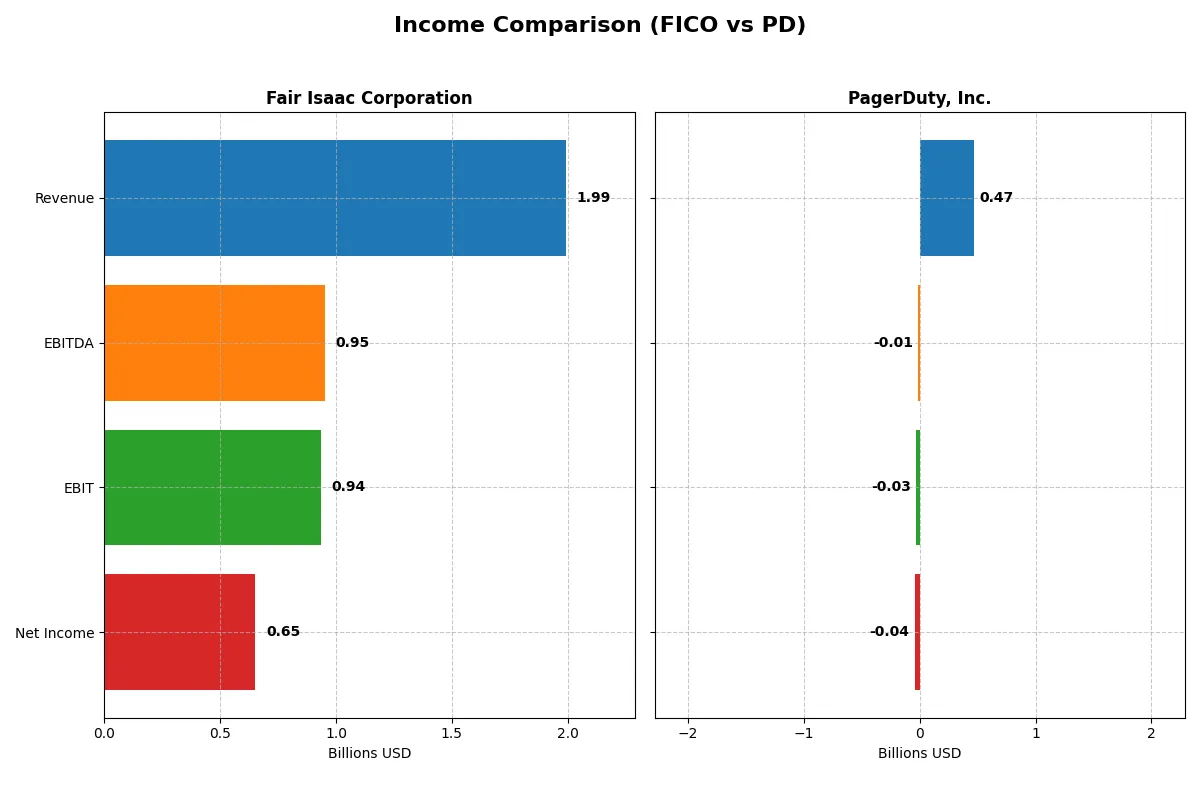
| Metric | Fair Isaac Corporation (FICO) | PagerDuty, Inc. (PD) |
|---|---|---|
| Revenue | 1.99B | 467M |
| Cost of Revenue | 354M | 80M |
| Operating Expenses | 712M | 448M |
| Gross Profit | 1.64B | 388M |
| EBITDA | 951M | -12M |
| EBIT | 936M | -32M |
| Interest Expense | 134M | 9M |
| Net Income | 652M | -54M |
| EPS | 26.9 | -0.59 |
| Fiscal Year | 2025 | 2025 |
Income Statement Analysis: The Bottom-Line Duel
This income statement comparison reveals how each company’s operational efficiency and profitability have evolved over recent years.
Fair Isaac Corporation (FICO) Analysis
FICO’s revenue surged from 1.32B in 2021 to nearly 2B in 2025, with net income climbing from 392M to 652M. The company sustains strong gross margins above 82%, and net margins reached a robust 32.75% in 2025. Efficiency gains propelled EBIT by 25% year-over-year, underscoring powerful momentum in cost management and profitability.
PagerDuty, Inc. (PD) Analysis
PagerDuty’s revenue nearly doubled from 214M in 2021 to 467M in 2025, yet it remains unprofitable with a net loss of 54M in 2025. Despite a healthy gross margin around 83%, negative EBIT margins (-6.95%) and net margins (-9.14%) reflect ongoing investment and scale challenges. However, PD’s 55% EBIT growth in 2025 signals improving operational leverage.
Margin Strength vs. Growth Struggles
FICO delivers clear profitability leadership with superior margins and steady income growth, benefiting from scalable operations and disciplined expense control. PagerDuty posts impressive top-line growth but struggles to translate scale into profits, reflecting its earlier growth-stage profile. Investors seeking sustainable earnings will find FICO’s efficiency and margin profile more compelling.
Financial Ratios Comparison
These vital ratios act as a diagnostic tool to expose the underlying fiscal health, valuation premiums, and capital efficiency of the companies compared below:
| Ratios | Fair Isaac Corporation (FICO) | PagerDuty, Inc. (PD) |
|---|---|---|
| ROE | -37.3% | -32.9% |
| ROIC | 53.0% | -9.7% |
| P/E | 55.6 | -39.9 |
| P/B | -20.8 | 13.1 |
| Current Ratio | 0.83 | 1.87 |
| Quick Ratio | 0.83 | 1.87 |
| D/E | -1.76 | 3.57 |
| Debt-to-Assets | 164.6% | 50.0% |
| Interest Coverage | 6.92 | -6.46 |
| Asset Turnover | 1.07 | 0.50 |
| Fixed Asset Turnover | 21.2 | 16.6 |
| Payout Ratio | 0 | 0 |
| Dividend Yield | 0 | 0 |
| Fiscal Year | 2025 | 2025 |
Efficiency & Valuation Duel: The Vital Signs
Financial ratios serve as a company’s DNA, exposing hidden risks and highlighting operational strengths that shape investor decisions.
Fair Isaac Corporation
Fair Isaac posts a robust net margin of 32.75%, signaling operational efficiency despite a negative ROE of -37.34%. Its P/E ratio stands elevated at 55.64, indicating a stretched valuation. The company opts for reinvestment over dividends, committing nearly 9.5% of revenue to R&D, fueling future growth.
PagerDuty, Inc.
PagerDuty struggles with a negative net margin of -9.14% and ROE of -32.92%, reflecting ongoing profitability challenges. The stock trades at a favorable negative P/E, though a high P/B ratio of 13.12 flags valuation concerns. It reinvests heavily in R&D, allocating over 30% of revenue to innovation, foregoing dividends to support expansion.
Premium Valuation vs. Operational Struggles
Fair Isaac exhibits stronger profitability and a proven reinvestment strategy but carries a premium valuation and some liquidity concerns. PagerDuty faces operational losses and stretched valuation metrics despite solid liquidity. Investors seeking operational efficiency may favor Fair Isaac; those prioritizing growth potential might consider PagerDuty’s innovation focus.
Which one offers the Superior Shareholder Reward?
Fair Isaac Corporation (FICO) and PagerDuty, Inc. (PD) both forgo dividends, prioritizing reinvestment and buybacks for shareholder value. FICO’s strong free cash flow of 31.8/share supports sustained buybacks, unlike PD’s modest 1.2/share free cash flow amid losses. FICO’s zero payout ratio and intense buybacks contrast with PD’s unprofitable margins and weak capital allocation. I see FICO’s distribution model as more sustainable and rewarding in 2026, offering superior total return driven by robust cash flow and disciplined buybacks, while PD’s reinvestment risks persistent losses and diluted value.
Comparative Score Analysis: The Strategic Profile
The radar chart reveals the fundamental DNA and trade-offs of both firms, highlighting their core financial strengths and weaknesses:
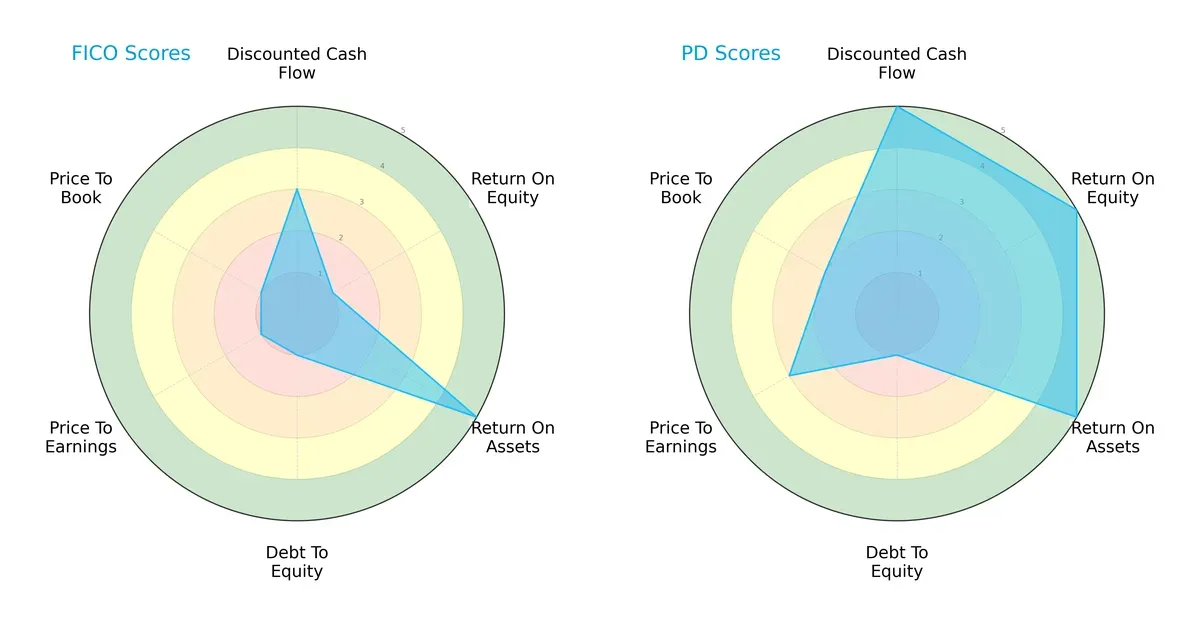
PagerDuty, Inc. (PD) displays a more balanced and robust profile with top scores in DCF, ROE, and ROA, signaling efficient capital allocation and asset utilization. Fair Isaac Corporation (FICO) relies heavily on asset efficiency (ROA) but suffers from weak equity returns and valuation metrics, indicating riskier capital structure and potential overvaluation. PD’s broader strengths make it a more resilient choice in this sector.
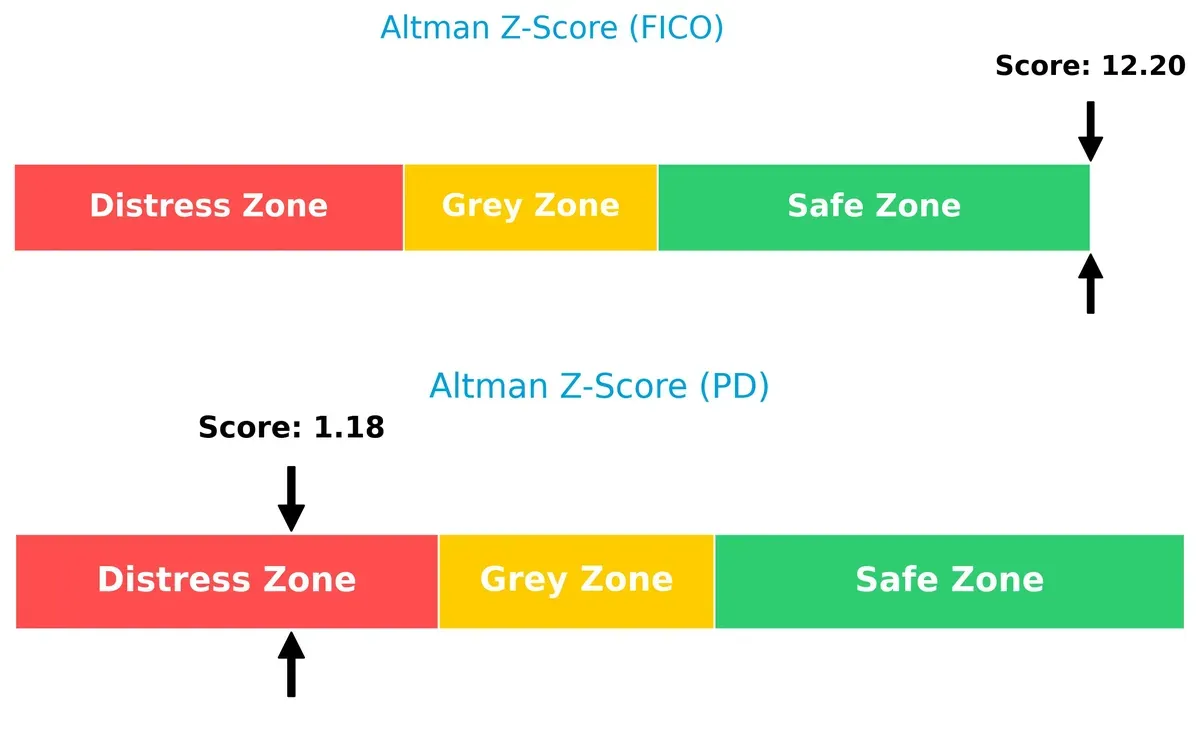
Bankruptcy Risk: Solvency Showdown
The Altman Z-Score delta shows a stark contrast: PD scores 1.18, deep in the distress zone, while FICO scores a very safe 12.2, signaling strong long-term solvency and lower bankruptcy risk:
Financial Health: Quality of Operations
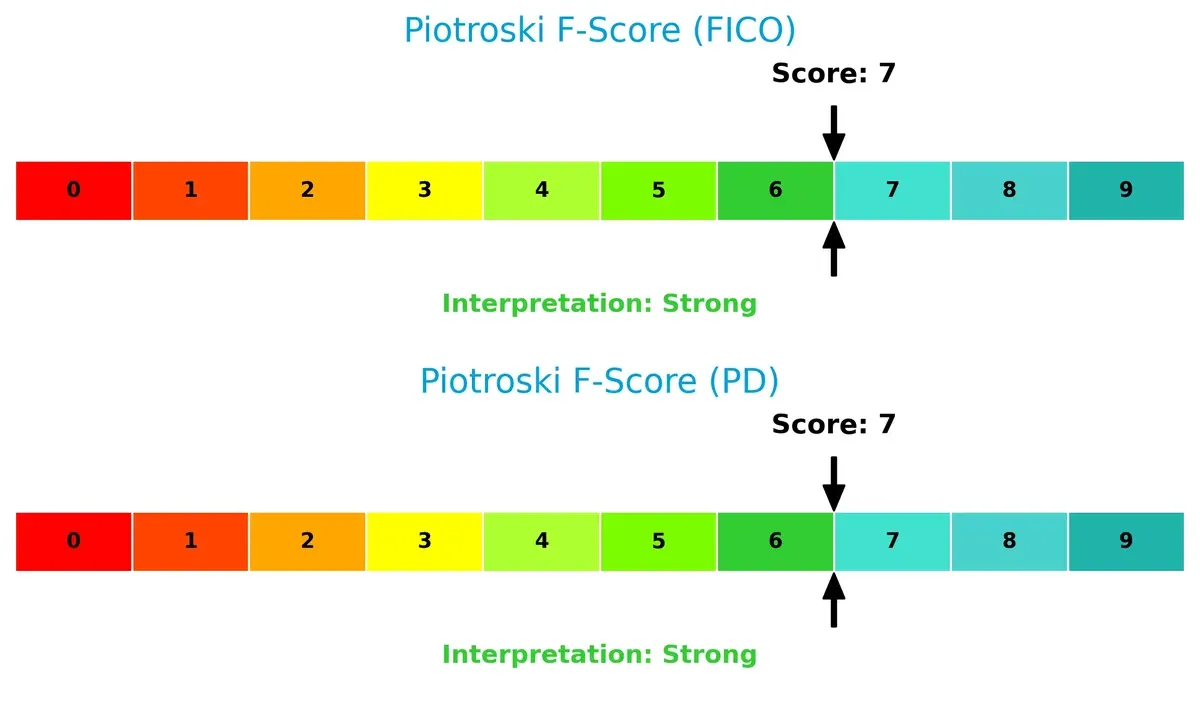
Both companies achieve a strong Piotroski F-Score of 7, indicating solid financial health. Neither shows critical red flags, but this parity masks PD’s higher operational risk revealed in solvency metrics:
How are the two companies positioned?
This section dissects FICO and PD’s operational DNA by comparing revenue distribution and internal dynamics. The goal is to confront their economic moats and identify which model offers the most durable competitive advantage today.
Revenue Segmentation: The Strategic Mix
This visual comparison dissects how Fair Isaac Corporation and PagerDuty diversify their income streams and where their primary sector bets lie:
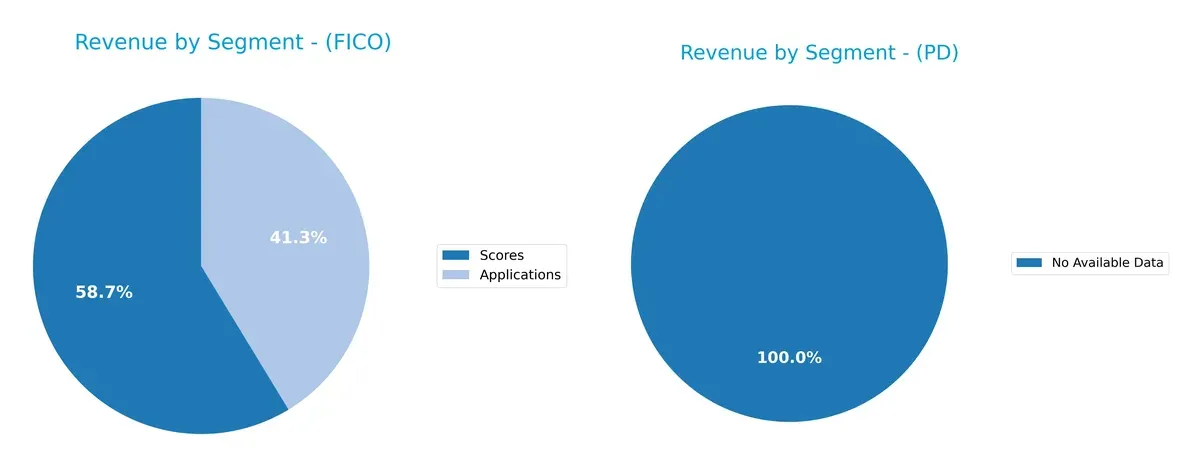
Fair Isaac Corporation anchors its revenue in two segments: Scores at $1.17B and Applications at $822M in 2025. This mix shows moderate diversification within financial software. PagerDuty lacks available segment data, preventing direct comparison. FICO’s dual-stream approach reduces concentration risk while leveraging its scoring dominance to maintain ecosystem lock-in in credit analytics. Absence of PagerDuty data signals caution on evaluating its strategic revenue spread.
Strengths and Weaknesses Comparison
This table compares the Strengths and Weaknesses of Fair Isaac Corporation (FICO) and PagerDuty, Inc. (PD):
FICO Strengths
- Strong profitability with 32.75% net margin
- High ROIC of 52.96% above WACC
- Diverse revenue streams in software and scores
- Significant global presence, especially Americas
- Favorable asset turnover ratios
PD Strengths
- Favorable WACC at 5.78% supports capital efficiency
- Positive fixed asset turnover at 16.61
- Solid liquidity with current and quick ratios at 1.87
- Growing US and Non-US revenue base
- Attractive P/E ratio status
FICO Weaknesses
- Negative ROE at -37.34% signals shareholder returns issues
- Unfavorable P/E ratio at 55.64 indicating high valuation
- Low current ratio at 0.83 raises liquidity concerns
- High debt to assets ratio at 164.6% implies leverage risk
- No dividend yield limits income generation
PD Weaknesses
- Negative profitability with -9.14% net margin
- Unfavorable ROE and ROIC indicate operational challenges
- Negative interest coverage suggests risk in debt servicing
- High debt to assets at 50% and unfavorable D/E ratio
- No dividend yield limits shareholder income
Both companies show contrasting financial health and profitability metrics. FICO’s strong profitability and global footprint contrast with liquidity and leverage risks. PD faces broader profitability and coverage challenges despite better liquidity. These differences underline distinct strategic and financial positions within their sectors.
The Moat Duel: Analyzing Competitive Defensibility
A structural moat is the only reliable shield protecting long-term profits from relentless competition erosion. Let’s examine how two software firms defend their turf:
Fair Isaac Corporation (FICO): Data-Driven Switching Costs
FICO’s moat rests on switching costs embedded in its credit scoring and decision analytics. This drives high ROIC (over 40% above WACC) and stable margins near 33%. In 2026, expanding software platforms could deepen this advantage.
PagerDuty, Inc. (PD): Emerging Network Effects
PagerDuty leverages network effects in digital operations management but lacks FICO’s scale. Its ROIC lags below WACC, signaling value destruction, though improving profitability hints at future moat expansion through market penetration and AI enhancements.
Verdict: Switching Costs vs. Nascent Network Effects
FICO’s wider moat, proven by durable economic profits and margin stability, outmatches PagerDuty’s still-developing competitive edge. FICO stands better equipped to defend and grow market share in 2026 and beyond.
Which stock offers better returns?
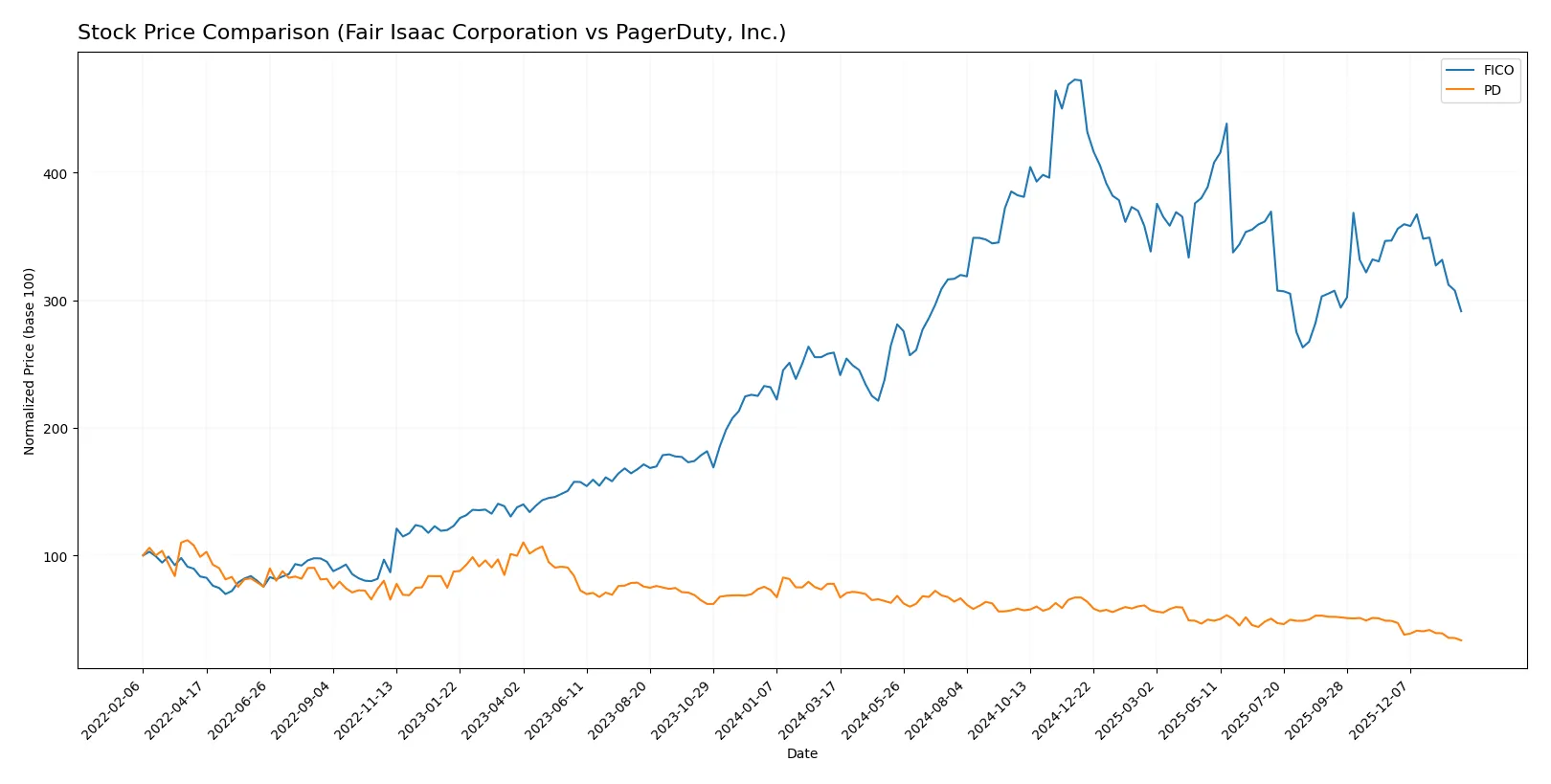
Fair Isaac Corporation’s stock rose 12.51% over the past year, showing a bullish trend with decelerating momentum. PagerDuty, Inc. declined 57.02%, reflecting a strong bearish trend and similarly slowing downside.
Trend Comparison
Fair Isaac’s stock gained 12.51% over 12 months, marking a bullish trend despite recent deceleration and a notable high of 2375.03. Volatility was elevated, with a standard deviation of 285.65.
PagerDuty’s price dropped 57.02% in the same period, indicating a bearish trend with deceleration. The stock’s highest price was 24.66, with low volatility at 2.94 standard deviation.
Fair Isaac outperformed PagerDuty, delivering the strongest market returns over the past year by a wide margin. PagerDuty’s performance has been significantly weaker and more volatile.
Target Prices
Analysts present a clear consensus on the target price ranges for Fair Isaac Corporation and PagerDuty, Inc.
| Company | Target Low | Target High | Consensus |
|---|---|---|---|
| Fair Isaac Corporation | 1640 | 2400 | 2115 |
| PagerDuty, Inc. | 15 | 19 | 16.2 |
The consensus target for Fair Isaac Corporation at 2115 significantly exceeds its current price of 1463, signaling strong upside potential. PagerDuty’s consensus target of 16.2 also suggests moderate upside from its current 10.6 price, reflecting cautious optimism.

Don’t Let Luck Decide Your Entry Point
Optimize your entry points with our advanced ProRealTime indicators. You’ll get efficient buy signals with precise price targets for maximum performance. Start outperforming now!
How do institutions grade them?
Fair Isaac Corporation Grades
The following table summarizes recent institutional grades for Fair Isaac Corporation:
| Grading Company | Action | New Grade | Date |
|---|---|---|---|
| Needham | Maintain | Buy | 2026-01-29 |
| Jefferies | Maintain | Buy | 2026-01-16 |
| Wells Fargo | Maintain | Overweight | 2026-01-14 |
| JP Morgan | Maintain | Neutral | 2025-11-06 |
| Baird | Maintain | Outperform | 2025-11-06 |
| Jefferies | Maintain | Buy | 2025-11-06 |
| BMO Capital | Maintain | Outperform | 2025-11-06 |
| Wells Fargo | Maintain | Overweight | 2025-10-14 |
| Barclays | Maintain | Overweight | 2025-10-02 |
| Needham | Maintain | Buy | 2025-10-02 |
PagerDuty, Inc. Grades
Recent institutional grades for PagerDuty, Inc. appear as follows:
| Grading Company | Action | New Grade | Date |
|---|---|---|---|
| Truist Securities | Maintain | Buy | 2026-01-07 |
| RBC Capital | Downgrade | Sector Perform | 2026-01-05 |
| Craig-Hallum | Downgrade | Hold | 2025-11-26 |
| Morgan Stanley | Maintain | Equal Weight | 2025-11-26 |
| RBC Capital | Maintain | Outperform | 2025-11-26 |
| TD Cowen | Maintain | Buy | 2025-11-26 |
| Truist Securities | Maintain | Buy | 2025-11-19 |
| RBC Capital | Maintain | Outperform | 2025-09-04 |
| Baird | Maintain | Neutral | 2025-09-04 |
| Canaccord Genuity | Maintain | Buy | 2025-09-04 |
Which company has the best grades?
Fair Isaac Corporation consistently receives buy and outperform ratings from multiple firms, indicating stronger institutional confidence. PagerDuty shows mixed grades with recent downgrades, potentially raising caution for investors.
Risks specific to each company
The following categories identify the critical pressure points and systemic threats facing both firms in the 2026 market environment:
1. Market & Competition
Fair Isaac Corporation
- Strong market position with long history and diverse analytics products. Faces intense competition in software analytics.
PagerDuty, Inc.
- Emerging player in digital operations with growth potential but weaker market penetration and intense competition.
2. Capital Structure & Debt
Fair Isaac Corporation
- High debt to assets ratio (165%) signals leverage risk despite favorable interest coverage.
PagerDuty, Inc.
- Moderate debt to assets (50%) but negative interest coverage warns of financial stress and refinancing risk.
3. Stock Volatility
Fair Isaac Corporation
- Beta of 1.29 shows higher volatility than the market, exposing investors to swings.
PagerDuty, Inc.
- Beta of 0.63 indicates lower volatility, offering some downside protection in turbulent markets.
4. Regulatory & Legal
Fair Isaac Corporation
- Operates globally, subject to complex data privacy and compliance regulations, increasing legal risk.
PagerDuty, Inc.
- Primarily US and Japan focused, facing evolving tech regulations but less global regulatory complexity.
5. Supply Chain & Operations
Fair Isaac Corporation
- Heavily reliant on software development talent and data quality; operational disruptions could impact product delivery.
PagerDuty, Inc.
- Dependent on cloud infrastructure and real-time data integration; outages or tech failures pose operational risks.
6. ESG & Climate Transition
Fair Isaac Corporation
- Moderate ESG exposure with some focus on sustainable analytics; climate transition impacts less direct but growing.
PagerDuty, Inc.
- ESG focus increasing; digital platform energy use and governance practices under scrutiny by investors.
7. Geopolitical Exposure
Fair Isaac Corporation
- Global presence exposes it to currency, trade tensions, and political risks across multiple regions.
PagerDuty, Inc.
- Limited geographical footprint reduces geopolitical risks but increases dependency on US and Japan stability.
Which company shows a better risk-adjusted profile?
Fair Isaac’s most impactful risk is its excessive leverage, elevating financial vulnerability despite strong operational metrics. PagerDuty struggles with poor profitability and negative interest coverage, signaling liquidity risks. I see PagerDuty’s lower volatility and moderate debt as advantages, but its distress-level Altman Z-score is a red flag. Overall, Fair Isaac presents a better risk-adjusted profile, supported by its strong Altman Z-score of 12.2, indicating financial safety, despite market volatility and leverage concerns.
Final Verdict: Which stock to choose?
Fair Isaac Corporation’s superpower lies in its durable competitive advantage, demonstrated by consistently high ROIC well above its cost of capital. Its robust cash generation supports ongoing growth, though a low current ratio signals a liquidity risk to monitor. It suits portfolios targeting aggressive growth with a tolerance for operational leverage.
PagerDuty, Inc. offers a compelling strategic moat through its recurring revenue model and strong balance sheet liquidity. Compared to Fair Isaac, it presents a safer financial profile but struggles to generate positive returns on invested capital. It fits well in GARP portfolios seeking growth tempered by reasonable risk management.
If you prioritize sustained value creation and operational efficiency, Fair Isaac outshines with its durable moat and superior profitability. However, if you seek revenue growth with a stronger liquidity cushion and less exposure to financial risk, PagerDuty offers better stability despite its current profitability challenges. Both require vigilance on evolving market conditions.
Disclaimer: Investment carries a risk of loss of initial capital. The past performance is not a reliable indicator of future results. Be sure to understand risks before making an investment decision.
Go Further
I encourage you to read the complete analyses of Fair Isaac Corporation and PagerDuty, Inc. to enhance your investment decisions: